Nine Planets or Eight? What Your Kid's Science Teacher Is Actually Telling Them Right Now
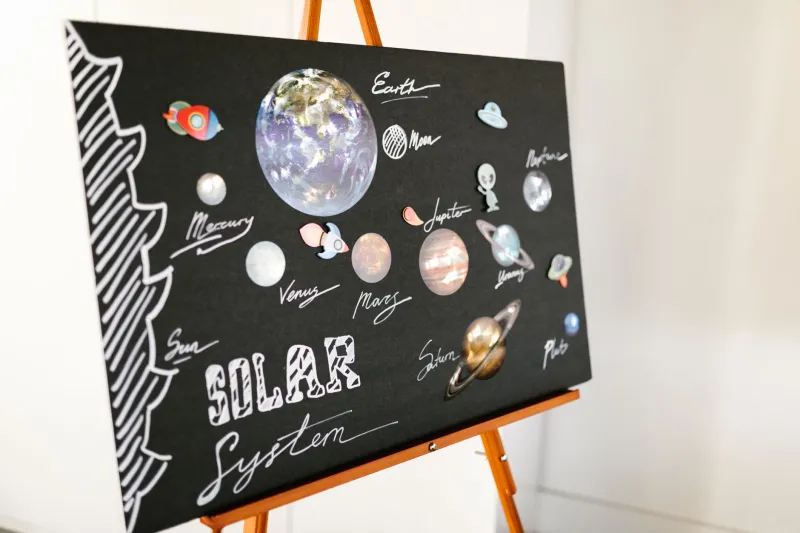
Somewhere in a suburban middle school in Ohio, a sixth-grade science teacher is standing in front of a laminated solar system poster that still shows nine planets. Pluto is right there, labeled and everything, hanging between Neptune and the edge of the known universe like nothing ever happened. She knows the poster is wrong. She's known for years. But replacing it costs money the school doesn't have, and besides — the state's curriculum standards haven't exactly been crystal clear on what she's supposed to say instead.
This is the Pluto problem in American education, and it's messier than most people realize.
The Textbook Lag Is Real — and Expensive
When the International Astronomical Union voted in August 2006 to reclassify Pluto as a dwarf planet, scientists celebrated (or mourned, depending on who you asked). But the decision sent a quiet shockwave through the nation's school systems that's still reverberating today.
Textbooks don't update themselves. Publishing cycles in K-12 education can run five to ten years, and school districts — especially underfunded ones — often hold onto materials long past their expiration date. A 2022 survey by the National Science Teaching Association found that a significant portion of elementary science classrooms were still using instructional materials more than a decade old. For a fact as culturally loaded as Pluto's status, that lag has real consequences.
"I've taught at three different schools over the past fifteen years," said one fifth-grade teacher in rural Tennessee who asked not to be named. "At two of them, the textbooks still said nine planets when I got there. I just had to supplement on my own and hope parents didn't push back."
That last part — the parent pushback — comes up more than you'd expect.
When Parents Learned the Solar System in 1987
Here's a wrinkle nobody talks about much: a lot of the adults supervising homework today went to school when Pluto was still fully, unambiguously a planet. For them, nine planets isn't just a fact — it's a memory. It's a mnemonic device they learned in third grade. It's the mobile that hung over their childhood bed.
So when their kid comes home and says "actually, Pluto isn't a planet anymore," some parents treat it like the teacher got something wrong.
"I had a parent email me once asking why I was 'confusing the kids' by teaching them Pluto was demoted," recalled a middle school earth science teacher in suburban Atlanta. "She was genuinely upset. She thought I was teaching them something controversial."
This puts teachers in a strange spot. They're supposed to teach current scientific consensus, but they're operating in communities where that consensus feels like an opinion — or worse, like an attack on something beloved.
State Standards: A Patchwork Mess
You might assume that state science standards would resolve this confusion by clearly specifying what students need to know about solar system classification. You would be wrong.
A quick scan of science standards across multiple states reveals a surprisingly uneven picture. Some states explicitly mention dwarf planets in their K-8 frameworks. Others reference "planets of the solar system" without any further clarification, leaving individual teachers to decide whether that phrase includes Pluto or not. A handful of states are still working from standards frameworks that predate the 2006 IAU vote entirely.
The Next Generation Science Standards (NGSS), which many states have adopted in some form, do address solar system structure — but they're notably light on specifics about planetary classification. That's partly by design (the NGSS prioritizes concepts over facts), but it leaves a vacuum that individual districts fill inconsistently.
"There's no national mandate that says 'teach eight planets,'" explained one curriculum coordinator for a large school district in the Pacific Northwest. "So you end up with teachers doing their best, and what that looks like varies enormously from classroom to classroom."
What the Good Teachers Are Actually Doing
Here's the thing, though: a lot of educators have turned this confusion into something genuinely valuable.
Rather than treating Pluto's reclassification as an awkward footnote, some teachers are using it as a live case study in how science actually works. How do scientists decide what counts as a planet? What happens when the rules change? Why do experts sometimes disagree?
"Honestly, it's one of my favorite lessons of the year now," said a seventh-grade science teacher in suburban Chicago. "We look at the IAU definition, we debate it, we look at what scientists who disagreed with the vote have said. The kids get really fired up. They feel like they're doing real science."
That approach aligns well with current thinking in science education, which increasingly emphasizes scientific practices — observation, argument, revision — over the memorization of static facts. Pluto, in this framing, isn't a problem. It's a teaching tool.
Some teachers have even incorporated the New Horizons mission data into their lessons, showing students the actual images of Pluto's heart-shaped nitrogen plain and asking them whether something this geologically active and visually stunning deserves to be called a "dwarf."
The Deeper Issue Nobody Wants to Name
Under all of this is a question that science education advocates have been wrestling with for a long time: how do American schools handle scientific change?
We're pretty good at teaching science as a collection of established facts. We're less good at teaching science as a process — one that revises itself, debates its own definitions, and sometimes makes calls that feel unsatisfying even to the experts involved.
Pluto is a perfect, low-stakes arena for practicing that skill. Nobody's health or safety depends on whether your fourth-grader knows the IAU's three-part definition of a planet. But getting comfortable with the idea that scientific knowledge evolves? That's a skill that matters enormously — for understanding climate science, vaccine research, and every other domain where public trust in science is on the line.
So maybe the real lesson isn't about Pluto at all. Maybe it's about learning to sit with uncertainty, to update your mental model when new information arrives, and to understand that "the rules changed" isn't a scandal — it's just how knowledge works.
Your kid's science teacher is trying to teach them that. She just needs a new poster.