The Road Not Demoted: What If the IAU Had Picked a Different Target in 2006?
Here's a question that doesn't get asked enough: why Pluto?
Okay, the scientific case is clear enough in retrospect. Pluto is small, its orbit is eccentric and overlapping with the Kuiper Belt, and it shares its neighborhood with a whole crowd of similarly sized objects. By the IAU's eventual criteria, it was always going to have a hard time making the cut.
But the criteria didn't exist until 2006. Before the vote, the definition of "planet" was famously, embarrassingly vague — more tradition than science. The IAU had to draw a line somewhere, and they drew it where they did. They could have drawn it somewhere else.
So let's play a game. What if they had?
Scenario One: Mercury Gets the Boot
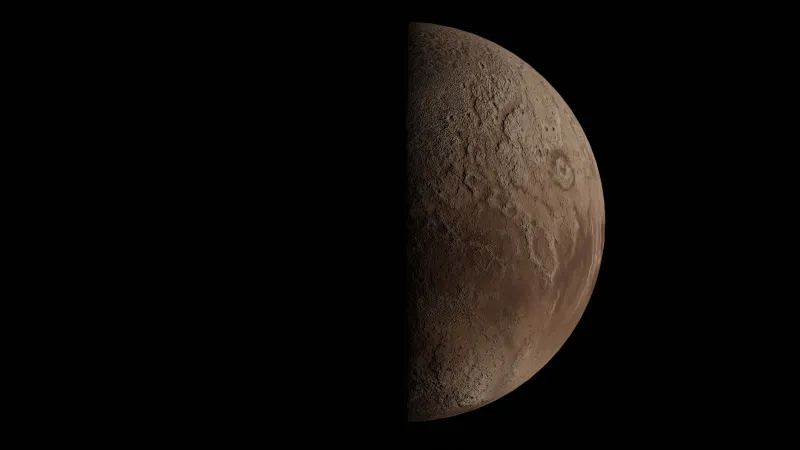
Mercury is, in many respects, a genuinely strange candidate for planetary status. It's smaller than two of the solar system's moons — Ganymede and Titan both have it beat on size. Its surface is cratered and ancient, more reminiscent of our Moon than of a "proper" planet. It has almost no atmosphere to speak of.
Now, Mercury does meet the IAU's actual criteria — it orbits the sun, it's spherical, and it has cleared its orbital neighborhood. But in an alternate 2006 where the committee had leaned harder into size and geological activity as defining characteristics, Mercury starts to look shaky.
Imagine the fallout. Mercury is named after a Roman god, it's one of the five planets visible to the naked eye, and humans have been tracking its motion across the sky for thousands of years. Ancient Babylonians knew about Mercury. Demoting it wouldn't just upset a generation of American schoolchildren — it would retroactively embarrass every civilization that ever looked up at the night sky.
The cultural and historical backlash would have been extraordinary. And unlike Pluto, Mercury doesn't have the defense of being "newly discovered." It's been a planet since before the word "planet" existed in English. Touching it would have felt like rewriting history.
Scenario Two: The Moon Gets a Promotion (and Causes Total Chaos)
Flip the thought experiment around. Instead of demoting something, what if the IAU had decided to promote something — specifically, our Moon?
This isn't as crazy as it sounds. The Moon is larger than Pluto. It's geologically active. It has a complex surface with mountains, plains, and ancient lava flows. Several researchers have argued over the years that the Earth-Moon system is better described as a double planet than as a planet and its satellite.
If the IAU had decided in 2006 that the Moon met some revised planetary threshold, suddenly we'd have ten planets. The mnemonic would need an update. Every textbook on Earth would require a reprint. And the cascading effect would be immediate: if our Moon qualifies, what about Ganymede? Titan? Callisto? Europa?
You'd end up with dozens of planets almost overnight, which is arguably what the IAU was trying to avoid when they tightened the definition in the first place. The entire reason Pluto got cut was to prevent a scenario where Eris, Sedna, Makemake, and a hundred other Kuiper Belt objects all had to be grandfathered in. Promoting the Moon would have triggered the exact same problem from the other direction.
Scenario Three: Eris Joins the Club Instead of Pluto Leaving It
Here's the scenario that was genuinely on the table in 2006: what if, instead of demoting Pluto, the IAU had simply added Eris as the tenth planet?
Eris was the discovery that forced the whole conversation. Found in 2005 by Mike Brown and his team at Caltech, Eris is slightly smaller in volume than Pluto but more massive. If Pluto was a planet, Eris had to be one too. The IAU faced a choice: add Eris (and by extension, everything else of similar size), or tighten the definition until both Eris and Pluto fell outside it.
In the ten-planet scenario, we'd probably have spent the next decade adding more planets as new Kuiper Belt objects got discovered and measured. The solar system's planet count would be a moving target, updated every few years as telescope technology improved. Kids would grow up learning "the current planets" rather than a fixed list.
Is that actually worse? Maybe not scientifically. But it would have made science education a logistical nightmare, and it would have robbed the solar system of the clean narrative that makes it teachable in the first place.
What the Thought Experiment Actually Reveals
Running through these scenarios makes something uncomfortable pretty obvious: planetary classification is, at its core, a human decision. The solar system doesn't care what we call its members. Pluto was always the same object before and after 2006 — same size, same orbit, same heart-shaped nitrogen plain. What changed was a vote in a conference room in Prague.
That's not a knock on science. Science requires classification to function, and any classification system is going to have edge cases and arbitrary-feeling boundaries. The IAU made a defensible call based on coherent criteria. But the choice of where to draw the line — that was never purely objective.
If Mercury had been discovered in 1930 instead of Pluto, and Pluto had been known since antiquity, we might have spent 2006 arguing about Mercury's demotion instead. The emotional weight would have attached to whichever object happened to fall on the wrong side of the line at the wrong moment in history.
So What Should Actually Matter?
This is the question Pluto's story keeps pushing us toward, and it's genuinely worth sitting with. Should a planet be defined by its size? Its orbital behavior? Its geological complexity? Its relationship to its host star? Its capacity to harbor interesting chemistry?
Different answers lead to radically different solar systems. A definition based on geological activity might include Io and Enceladus while excluding Mercury. A definition based on atmosphere might kick Mars to the curb and keep Titan. A definition based on mass alone would give us a very short list indeed.
None of these are obviously wrong. None are obviously right. What they are is interesting — and that's the real gift Pluto's demotion gave us. By forcing the question into the open, the IAU didn't just reclassify a dwarf planet. They handed every curious person on Earth a genuinely fascinating puzzle.
Where you draw the line says a lot about what you think matters. And in science, as in life, that's always worth arguing about.