Still Salty About Pluto? You're Not Alone — And Neither Are the Scientists
Ask anyone who was paying attention in August 2006 what they remember about that summer, and there's a decent chance Pluto comes up. Not because it was a particularly dramatic news cycle — though it was — but because the International Astronomical Union's decision to reclassify Pluto as a "dwarf planet" hit people in a weirdly personal way. Kids who'd grown up memorizing nine planets felt cheated. Astronomers who'd spent careers studying the outer solar system felt like the rug had been pulled out from under them. And somehow, nearly 20 years later, the argument is still very much alive.
Welcome to one of science's most enduring, most passionate, and occasionally most ridiculous ongoing debates.
What Actually Happened in Prague
Let's set the scene. In August 2006, the IAU held its general assembly in Prague, Czech Republic. About 2,500 astronomers were in attendance — which sounds like a lot until you realize there are tens of thousands of professional astronomers worldwide. The vote that ultimately demoted Pluto was passed by a relatively small fraction of the global astronomical community, and it came down to a definition that remains controversial to this day.
Under the new framework, a planet must do three things: orbit the Sun, have enough mass for gravity to pull it into a roughly spherical shape, and — this is the contentious part — "clear the neighborhood" around its orbit. Pluto, which shares its orbital region with thousands of other Kuiper Belt objects, failed that third test.
The definition passed. Pluto became a dwarf planet. And the arguments started almost immediately.
The Scientific Case Against the Decision
Here's something the headlines often glossed over: a lot of actual, credentialed astronomers think the IAU got it wrong, and their objections aren't just sentimental. They're substantive.
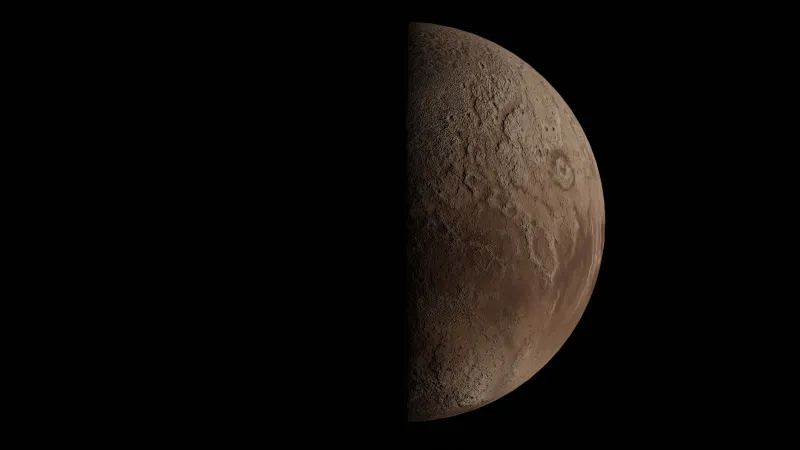
One of the loudest critics has been Alan Stern, the principal investigator of NASA's New Horizons mission — the spacecraft that flew past Pluto in 2015 and sent back those stunning, detailed images of a geologically active world with mountains, plains, and a heart-shaped nitrogen ice feature. Stern and colleagues have argued that the "clearing the neighborhood" criterion is scientifically arbitrary and inconsistent. Under a strict application of that rule, Earth itself wouldn't qualify as a planet if it were placed in Pluto's orbit. Jupiter, the solar system's vacuum cleaner, hasn't fully cleared its orbital path either — it shares space with the Trojan asteroids.
Stern has proposed an alternative, geophysically based definition: if an object is large enough for gravity to shape it into a sphere, it's a planet, full stop. Under that definition, Pluto is absolutely a planet — and so are dozens of other round objects in our solar system, including several moons.
That's precisely where the counter-argument kicks in. Critics of Stern's approach point out that a definition allowing for 50, 60, or even 100+ planets creates its own problems. How do you teach that in a classroom? How do you build a coherent framework for planetary science when "planet" becomes a category so broad it loses practical meaning?
The Generational Fault Line
There's also a cultural and generational dimension to this debate that's hard to separate from the science. For Americans who grew up before 2006, Pluto was the ninth planet — discovered in 1930 by Clyde Tombaugh, an American astronomer from Kansas. That national pride is real, and it amplifies the emotional stakes in a way that probably wouldn't apply if we were debating, say, the classification of a distant asteroid.
Younger astronomers who entered the field after 2006 often have a different perspective. For them, the IAU definition, however imperfect, is simply the working framework — something to be refined over time as science always is. They're less attached to Pluto's planetary identity and more interested in understanding it as a member of the Kuiper Belt, a genuinely fascinating population of small worlds in its own right.
That generational split reflects something true and important about how scientific consensus forms. It doesn't happen overnight, and it doesn't always happen cleanly. Sometimes a vote is called before the community is ready, and the resulting fault lines take decades to fully resolve.
What the Debate Reveals About Science Itself
Here's the uncomfortable truth that the Pluto debate keeps bumping up against: science isn't a perfectly objective, frictionless process. It's done by human beings with careers, reputations, and sometimes deeply held convictions about how the universe should be organized.
The IAU vote was, in some ways, a reminder that scientific classification systems are human constructs. Nature doesn't care whether Pluto is a planet or a dwarf planet. It just keeps orbiting the Sun at 3.67 billion miles out, doing what it's been doing for 4.5 billion years. The categories we impose on it say more about us than they do about Pluto.
That's not a reason to throw out classification systems — they're genuinely useful tools for organizing knowledge and communicating across disciplines. But it is a reason to hold them a little more loosely, to acknowledge that today's consensus can be tomorrow's revision.
Is Resolution Even Possible?
Every few years, a new paper proposes a revised planetary definition. Every few years, someone holds a panel at an astronomy conference where the debate gets relitigated with fresh energy. And every few years, a new generation of students asks their teacher why Pluto isn't a planet anymore and gets a more complicated answer than either of them expected.
Maybe that's actually okay. Maybe the ongoing argument about Pluto's status is less a failure of science and more a sign that science is working — that it's self-critical, willing to revisit its own decisions, and populated by people who care enough to keep arguing.
At Where Is Pluto, we think Pluto's story — whether it's a planet, a dwarf planet, or something else entirely — is one of the most compelling narratives in modern astronomy. Not because the classification question has a clean answer, but precisely because it doesn't. The messiness is the point. And if you're still a little salty about the whole thing? Honestly, same.