Saturn's Icy Secret: How a Tiny Moon Called Enceladus Became the Solar System's Biggest Surprise
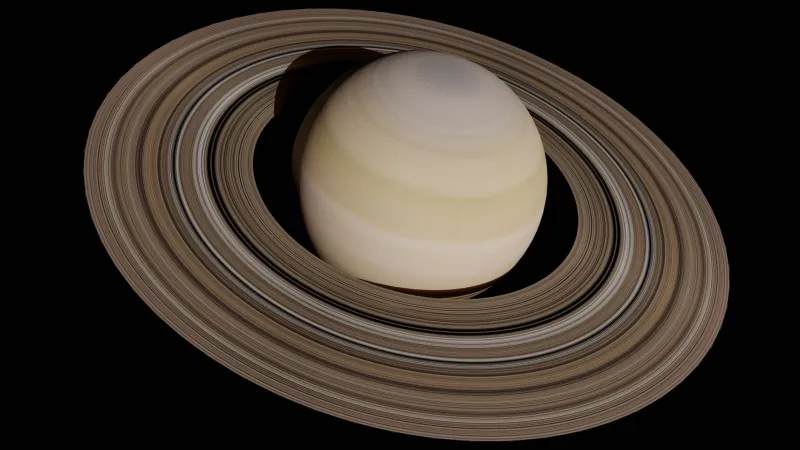
If you've been following the story of Pluto — and let's be honest, if you're here at Where Is Pluto, you probably have — you already know that small worlds can pack enormous scientific punch. Pluto shook up everything we thought we knew about the outer solar system. But there's another compact world out there that's been quietly pulling off something just as jaw-dropping, and it orbits Saturn.
Meet Enceladus. It's only about 313 miles across — roughly the size of Arizona — and for a long time, astronomers figured it was just another frozen, geologically dead chunk of ice drifting through the outer solar system. They were spectacularly wrong.
A Spacecraft Changes Everything
The real turning point came courtesy of NASA's Cassini spacecraft, which spent 13 years orbiting Saturn and its moons between 2004 and 2017. When Cassini swooped in for close flybys of Enceladus, scientists expected to find a quiet, icy surface. Instead, they discovered something that made researchers practically fall out of their chairs: enormous geysers blasting water vapor and ice particles hundreds of miles into space from cracks near the moon's south pole.
These weren't subtle, easy-to-miss features. The plumes were dramatic, continuous, and rich with chemistry. Cassini actually flew directly through them — multiple times — and sampled what they contained. The results were stunning.
The geysers were loaded with water, salt, silica particles, carbon dioxide, methane, and molecular hydrogen. That last ingredient is a particularly big deal. On Earth, molecular hydrogen is produced when hot water reacts with rocks in a process called hydrothermal activity — the same kind of chemistry that powers deep-sea hydrothermal vents, which happen to be some of the most biologically productive environments on our planet, even without sunlight.
What's Actually Going On Down There
So where is all this material coming from? The short answer: a global subsurface ocean of liquid water sandwiched between Enceladus's rocky core and its thick outer shell of ice.
Scientists estimate this ocean could be tens of miles deep. Gravity measurements from Cassini, combined with the chemistry of the plumes, paint a picture of a moon with warm, chemically active water in contact with rocky seafloor — conditions that on Earth would be considered prime real estate for microbial life.
The heat driving all of this comes from tidal forces. Saturn's gravity constantly squeezes and stretches Enceladus as it orbits, generating friction and heat deep within the moon — similar to how squeezing a stress ball warms it up slightly, only on a planetary scale and over billions of years.
What makes this especially exciting is the combination of ingredients scientists found. You need liquid water, an energy source, and the right chemistry to support life as we understand it. Enceladus appears to have all three. That's not a common combination in our solar system, and it puts this little moon in extremely select company.
Why This Rivals the Pluto Moment
When Pluto was reclassified in 2006, it forced the entire scientific community — and the public — to rethink what counts as a planet and how we categorize worlds. It was a moment that revealed how much our solar system still had to teach us.
The discovery of Enceladus's ocean is doing something similar, but for the question of life itself. For decades, the conventional wisdom held that liquid water in our solar system was basically an Earth-exclusive feature, with maybe a few other candidates worth investigating. Enceladus blew that assumption wide open.
It also shifted how scientists think about the "habitable zone" — the range of distances from a star where liquid water can theoretically exist on a planet's surface. Enceladus is way outside that zone by traditional definitions. And yet it has a liquid ocean. The lesson? Internal heat sources, not just sunlight, can create habitable conditions. That means habitable environments could exist in far more places throughout the universe than we previously imagined.
What Comes Next
Cassini ended its mission in 2017 by diving into Saturn's atmosphere — a deliberate move to avoid contaminating any of Saturn's potentially habitable moons. But the scientific hunger to return to Enceladus hasn't cooled one bit.
NASA and the European Space Agency are both actively considering dedicated missions to Enceladus. One concept, called Enceladus Orbilander, would orbit the moon and potentially even land on its surface, giving scientists the chance to directly analyze the plume material and search for signs of biological activity. A decision on funding and development could come within the next several years.
In the meantime, researchers are still mining the massive dataset Cassini collected. New papers analyzing that data continue to appear regularly, each one adding another piece to the puzzle. In 2023, scientists announced the detection of phosphorus in Cassini's plume samples — completing the checklist of elements considered essential for life as we know it.
Small Worlds, Big Questions
Here at Where Is Pluto, we have a soft spot for worlds that get underestimated. Pluto spent decades being called the solar system's ninth planet before scientists realized it was something far more interesting: a member of a vast, complex family of icy bodies beyond Neptune. Enceladus is following a similar trajectory — from overlooked moon to one of the most scientifically compelling objects in our entire solar system.
The cosmos keeps reminding us that size isn't everything. Some of the biggest questions in science — Are we alone? What does it take for life to emerge? — might ultimately be answered by the smallest, most unassuming worlds. And right now, a frozen little moon orbiting Saturn is making a very strong case for why we should keep looking.