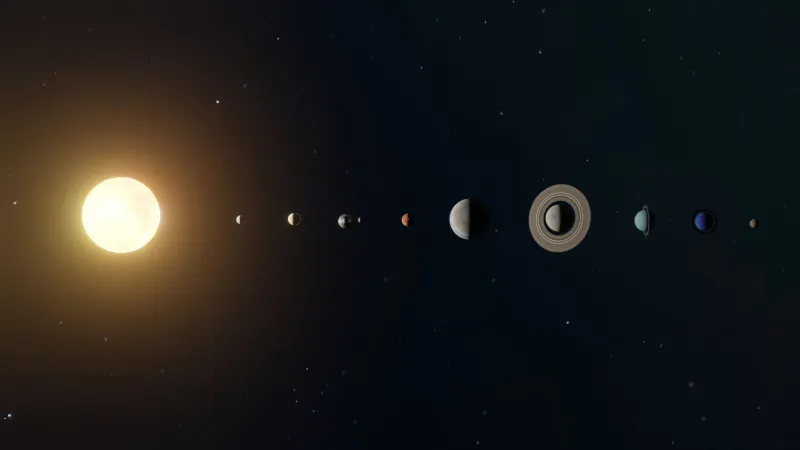
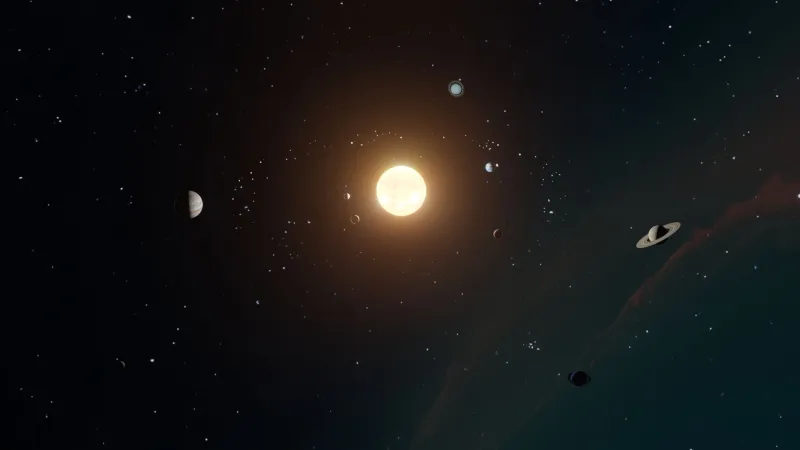
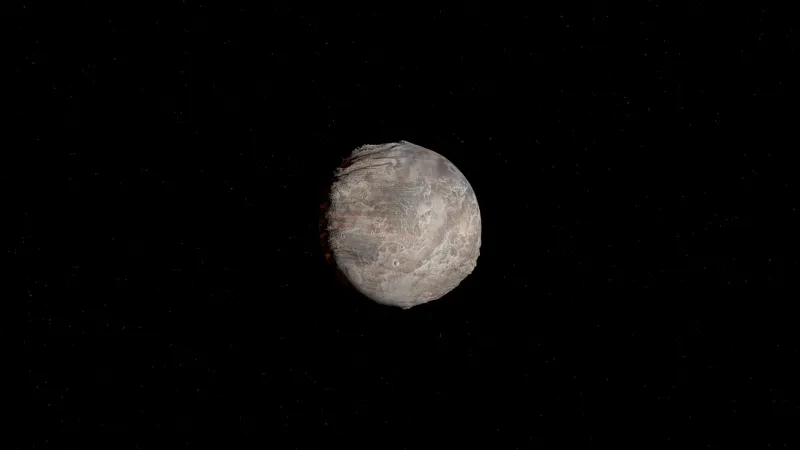
When Scientists Changed the Solar System's Rulebook — And Nothing Was Ever the Same
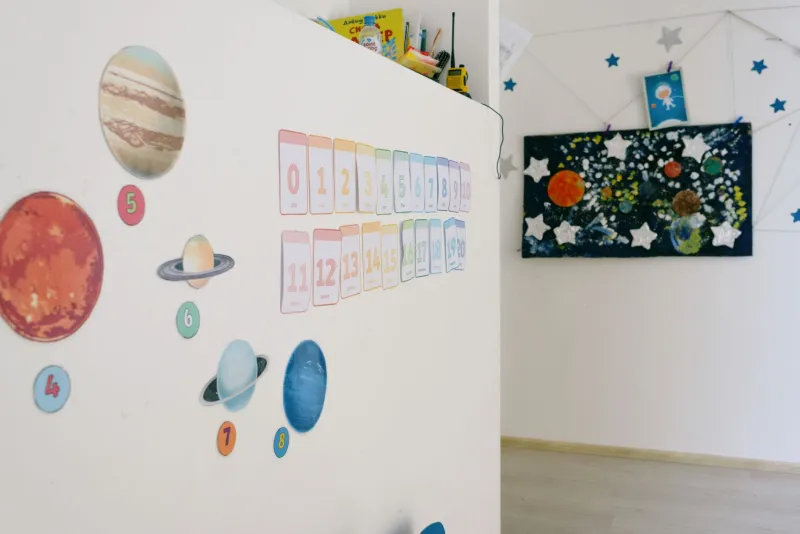
For most of the 20th century, American kids grew up memorizing nine planets. The mnemonic devices were endless — My Very Educated Mother Just Served Us Nine Pizzas being the classroom favorite. Pluto sat comfortably at the end of the list, small and distant but undeniably part of the family. Then came August 24, 2006, and a vote in Prague that changed everything.
The International Astronomical Union — the body of professional astronomers that, among other things, gets to name things in space — gathered for its General Assembly and did something nobody outside the scientific community had really seen coming. They defined, for the very first time in history, what a planet actually is. And under that new definition, Pluto didn't make the cut.
The fallout was immediate, emotional, and — let's be honest — kind of hilarious in retrospect. State legislatures passed symbolic resolutions defending Pluto's honor. Elementary school teachers had to bin their solar system posters. And a generation of adults felt weirdly betrayed by science itself.
But here's the thing: the reclassification wasn't a demotion born from spite. It was the result of decades of real scientific tension finally boiling over — and it fundamentally reshaped how we understand our cosmic neighborhood.
The Problem That Had Been Building for Years
Long before 2006, astronomers had a nagging issue. Pluto, discovered in 1930 by Clyde Tombaugh at the Lowell Observatory in Arizona, was always a bit of an oddball. It's tiny — smaller than Earth's Moon. Its orbit is tilted and elliptical, crossing Neptune's path at times. And as telescope technology improved through the late 20th century, scientists began finding more objects lurking in the same distant region of the solar system, a vast ring of icy debris called the Kuiper Belt.
The real turning point came in 2005, when astronomer Mike Brown and his team at Caltech discovered Eris — an object out beyond Pluto that appeared, at first, to be even larger. If Pluto was a planet, Eris probably was too. And if Eris was a planet, what about all the other Kuiper Belt objects that were sure to be found as telescopes got sharper?
The solar system was starting to look less like a tidy nine-planet system and more like a chaotic neighborhood with dozens of planet-sized squatters. Something had to give.
What the IAU Actually Decided
The definition the IAU settled on in Prague has three criteria. To be a planet, a body must: orbit the Sun, have enough mass for gravity to pull it into a roughly spherical shape, and — this is the key one — have cleared the neighborhood around its orbit.
That third criterion is where Pluto stumbles. Clearing the neighborhood doesn't mean a planet has to be alone — it means it gravitationally dominates its orbital zone, either absorbing nearby objects or flinging them away over time. Jupiter does this brilliantly. Earth does it. Pluto, sharing a crowded Kuiper Belt with thousands of other icy bodies, does not.
Objects that meet the first two criteria but not the third became "dwarf planets" — a new classification that Pluto now leads, in name recognition at least. Eris, Haumea, Makemake, and Ceres (in the asteroid belt between Mars and Jupiter) joined the club.
The vote itself wasn't exactly a landslide of consensus. Only about 424 of the IAU's roughly 10,000 members were present to cast ballots that day — a fact that Pluto's defenders have never let anyone forget. Some astronomers argued the definition was flawed, that "clearing the neighborhood" is a fuzzy standard that could theoretically disqualify Earth if you placed it in Pluto's orbit. The debate in the scientific community didn't end in Prague. It just moved to journals, conferences, and, eventually, Twitter.
How Classrooms Had to Adapt
The ripple effects in American education were significant. Curriculum writers, textbook publishers, and science teachers across the country had to update materials almost overnight. For a subject that sometimes struggles to feel urgent to students, the Pluto debate turned out to be a surprisingly powerful teaching moment.
Suddenly, kids were asking real questions: Who decides what a planet is? Can science change its mind? What's the difference between a definition and a discovery? These are genuinely important concepts — the kind of critical thinking that science education aims to build — and Pluto handed them to teachers on a silver platter.
Many educators found that the reclassification actually made planetary science more interesting, not less. Instead of memorizing a fixed list, students could engage with the idea that scientific categories are tools we build to make sense of the world, and sometimes those tools need to be upgraded.
Why the Definition Still Matters
It's tempting to write this whole episode off as a semantic argument — who cares what we call Pluto, as long as we keep studying it? But definitions in science carry real weight. They shape research priorities, influence how funding gets allocated, and determine what questions we think are worth asking.
The "planet" label matters because planets are the objects we associate with the potential for complex geology, atmospheres, maybe even life. When we ask whether a world is planet-like, we're really asking a whole bundle of questions about its history, its structure, and its place in the solar system's story.
The reclassification also opened up a much richer conversation about the outer solar system. Instead of treating the Kuiper Belt as a weird afterthought beyond the "real" planets, scientists began taking it seriously as a region full of scientifically valuable objects — worlds that preserve clues about the early solar system in deep freeze.
NASA's New Horizons mission, which flew past Pluto in 2015, was already in development when the vote happened. But the images and data it returned — revealing mountains of water ice, a heart-shaped nitrogen plain, and a surprisingly complex atmosphere — reminded everyone that dwarf planets aren't consolation prizes. They're full-blown worlds worth exploring.
The Bigger Lesson
What the 2006 reclassification really gave us — beyond the culture war over planetary status — is a window into how science actually works. It's not a static list of facts handed down from authority. It's a living process of observation, argument, revision, and sometimes, uncomfortable change.
Pluto didn't shrink. It didn't become less interesting. It didn't stop being a place worth sending a spacecraft. What changed was our understanding of the solar system around it, and our willingness to let that understanding reshape our categories.
If anything, that's the most important thing we can teach — in classrooms, in science museums, or on a website called Where Is Pluto. The universe doesn't care about our mnemonic devices. But it does reward the people who are curious enough to keep asking better questions.
So yeah, Pluto's a dwarf planet now. And honestly? That's pretty fascinating.