Textbooks, Tests, and a Tiny Ice World: How Pluto Rewrote the American Classroom
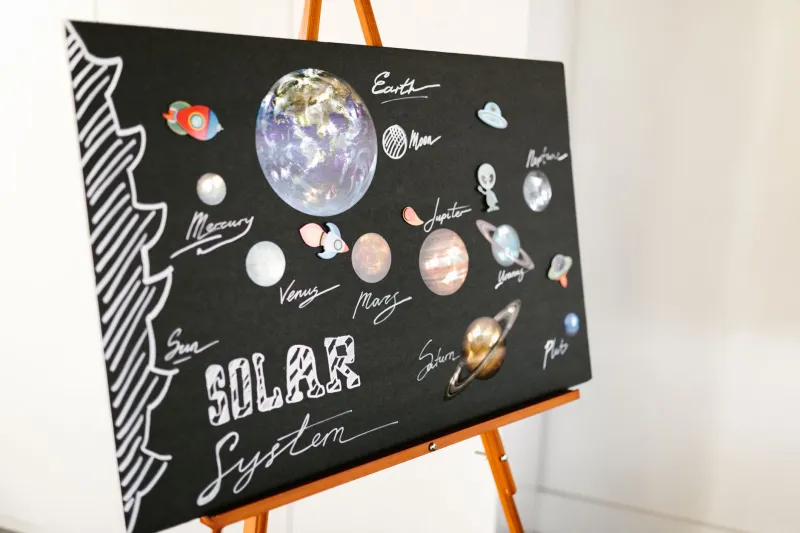
For most American kids who grew up before 2006, the solar system was simple: nine planets, in order, often memorized through some variation of "My Very Educated Mother Just Served Us Nine Pizzas." Then Pluto got the boot, and suddenly, teachers across the country had a problem. The mnemonic didn't work anymore. The posters on the wall were wrong. And a whole generation of curious eight-year-olds wanted to know why.
What followed wasn't just a minor curriculum tweak. Pluto's reclassification triggered one of the more fascinating chain reactions in modern American science education — a quiet reshuffling of what gets taught, how it's assessed, and what it means to "know" something in a subject where the facts themselves can change overnight.
The Moment the Lesson Plans Broke
Teachers didn't get a memo from the IAU. Most found out the same way everyone else did — through news alerts, morning radio, and the sudden avalanche of questions from students who'd heard the story before arriving at school.
For elementary educators, the immediate challenge was practical. Science curricula in most states had been built around nine planets as a foundational fact. Third-grade units on the solar system, standardized assessment questions, even the laminated posters bolted to classroom walls — all of it reflected a nine-planet model that had just been officially retired.
Replacing those materials wasn't instant. School districts operate on budget cycles. Textbook adoptions happen on multi-year schedules. In many classrooms across the country, outdated solar system charts stayed up for years after 2006 simply because no replacement funding existed. Some teachers quietly covered Pluto with a sticky note. Others left it up and used the discrepancy as a teaching moment — which, depending on how you look at it, might have been the most scientifically honest approach of all.
The Standardized Test Problem
Curriculum materials are one thing. Standardized tests are another beast entirely.
State science assessments don't get rewritten overnight. Questions about the number of planets in our solar system — the kind of straightforward factual recall that shows up on elementary benchmarks — suddenly had no clean answer. Was "eight" correct? Was "nine" still acceptable? What about students who answered "eight or nine, depending on how you define a planet"? That response is arguably the most scientifically accurate of all, but it doesn't fit neatly into a multiple-choice bubble.
Testing coordinators in several states had to issue guidance clarifying how scoring should handle solar system questions during the transition period. Some assessments were quietly revised. Others weren't, leaving individual teachers to coach students on which answer the test wanted — a situation that highlighted a deeper tension between scientific accuracy and standardized assessment design.
It's worth noting that this wasn't a failure of the education system so much as a stress test of it. Science is a living discipline. Facts evolve. The Pluto situation forced a real conversation about whether standardized tests were built to handle that reality.
A Generational Divide Baked Into Science Literacy
Here's where it gets genuinely interesting from an educational standpoint: the reclassification created a hard generational line in what Americans believe about the solar system.
Anyone who completed elementary school before roughly 2007 or 2008 was taught, as settled fact, that the solar system has nine planets. That information was tested, reinforced, and stored in long-term memory the way foundational facts tend to be. Updating it requires active effort — the kind of deliberate cognitive revision that most adults simply don't make unless something forces them to.
Kids who entered school after the transition, by contrast, grew up learning eight planets from day one. For them, Pluto as a dwarf planet isn't a correction — it's just the baseline. There's no emotional attachment to the nine-planet model because they never held it.
The result is a population split roughly along age lines, where two groups of reasonably educated Americans hold genuinely different mental models of the solar system — and both feel confident they're right. That's a fascinating outcome for a single astronomical decision.
How Educators Turned the Controversy Into a Teaching Tool
Some of the most creative classroom responses to Pluto's demotion didn't try to resolve the controversy at all. Instead, teachers used the ongoing debate as a window into how science actually works.
Rather than presenting the IAU's 2006 decision as a final, unquestionable verdict, forward-thinking educators began framing it as an example of scientific classification in action — messy, contested, and subject to revision. Students were introduced to the concept of a "dwarf planet," asked to evaluate the IAU's criteria, and sometimes even invited to argue for or against Pluto's status using evidence.
This approach did something that rote memorization of planet names never could: it showed students that science isn't a list of facts handed down from authority. It's an ongoing argument, conducted with evidence, where the conclusions can and do change. Pluto, weirdly, became one of the most effective tools available for teaching scientific thinking to middle schoolers.
The Curriculum Is Still Catching Up
More than fifteen years on, the educational landscape around Pluto remains patchier than you might expect. Next Generation Science Standards, adopted in various forms by most states, emphasize the process of scientific inquiry over fact memorization — which theoretically sidesteps the nine-versus-eight debate. But implementation varies enormously by district, and plenty of classrooms still treat the solar system as a static fact set rather than a dynamic area of active research.
Meanwhile, the science itself keeps moving. New discoveries in the outer solar system, ongoing debates about the definition of a planet, and the sheer number of objects now known to exist beyond Neptune all suggest that whatever we teach kids today might need updating again before they graduate.
Maybe that's the real lesson Pluto left behind — not a new number to memorize, but a reminder that the universe doesn't hold still long enough for any textbook to fully catch it.