Could the Moon Get Demoted? The Surprisingly Thin Line Between Satellite and Second-Class Citizen
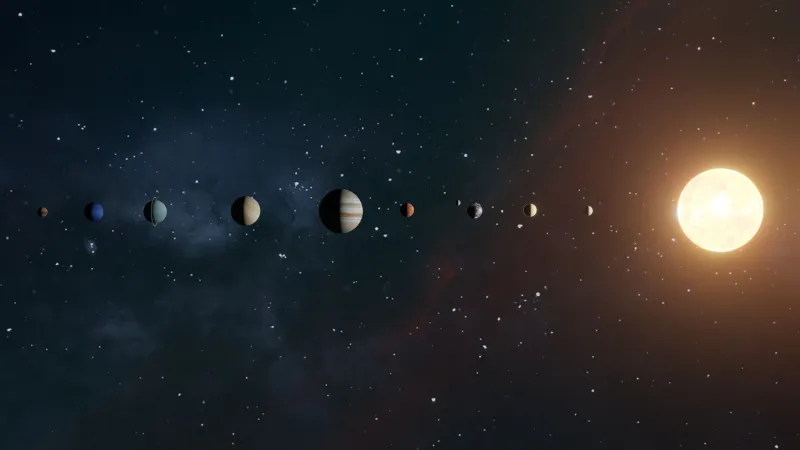
We all remember where we were — metaphorically speaking — when Pluto got the boot. August 2006, the International Astronomical Union votes, and suddenly the solar system loses a planet most of us grew up memorizing. The mnemonic devices were ruined. The classroom posters were outdated. And a generation of space fans developed a grudge against scientists in suits.
But here's a question that doesn't come up nearly enough at dinner tables or science classrooms: could the Moon be next?
Okay, okay — put down the pitchfork. The Moon isn't going anywhere, and no committee is quietly drafting paperwork to demote it. But when you actually sit down with the IAU's official definition of a planet and start reading the fine print, things get genuinely interesting. The same criteria that ended Pluto's planetary career shine an uncomfortable spotlight on our own backyard neighbor.
Let's dig in.
The Three-Part Test That Changed Everything
In 2006, the International Astronomical Union established a three-part definition for what qualifies as a planet. To earn the title, a body must:
- Orbit the Sun (not another planet)
- Have enough mass that gravity pulls it into a roughly spherical shape
- Clear the neighborhood around its orbit of other debris
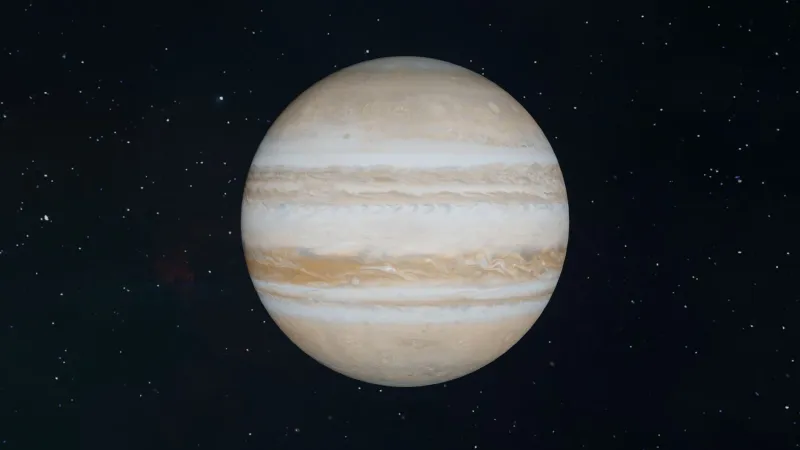
Pluto famously stumbled on that third requirement. The Kuiper Belt is absolutely lousy with icy objects, and Pluto hasn't gravitationally dominated its orbital zone the way Jupiter or Earth have. So, dwarf planet it became.
Now apply that same checklist to the Moon.
Criterion one — orbiting the Sun — is where things immediately get complicated. The Moon doesn't orbit the Sun directly. It orbits Earth. That alone technically disqualifies it from being a planet, which is actually fine because nobody's calling it a planet. It's a moon. A satellite. We're good, right?
Not so fast.
When Your Moon Is Bigger Than Some Planets
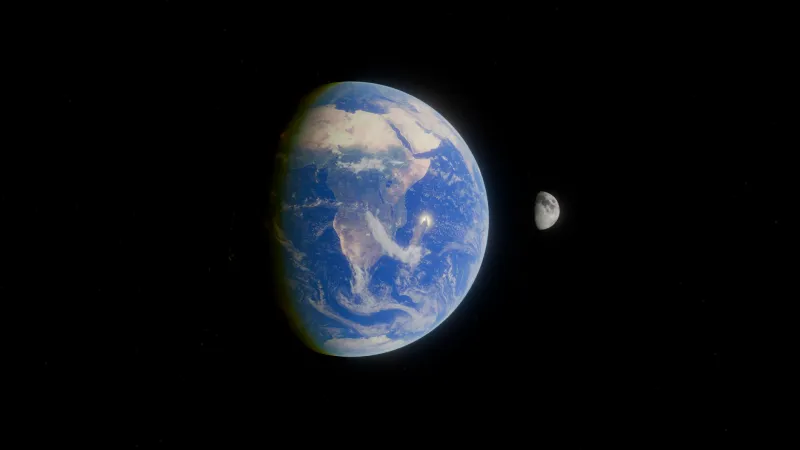
Here's the part that makes astronomers shift awkwardly in their chairs. The Moon is enormous relative to Earth. Our Moon is roughly 27% the diameter of Earth — a ratio that's almost embarrassingly large compared to the moons of other planets. Mars has Phobos and Deimos, which are basically tumbling potatoes. Even Jupiter's famous Ganymede, while larger than our Moon in absolute size, is dwarfed by Jupiter itself.
Our Moon is so large, relative to its host planet, that some scientists have half-seriously suggested the Earth-Moon system should be classified as a double planet. The two bodies share a gravitational tug-of-war, and the Moon's influence on Earth — tides, axial stabilization, the length of our days — is profound enough that Earth as we know it wouldn't exist without it.
So why does this matter for classification? Because the Moon's size and gravitational relationship with Earth blur the line between "moon" and "co-equal partner." And when definitions get blurry, reclassification conversations aren't far behind.
The Barycenter Argument
Here's a detail that genuinely surprises most people: the Earth and Moon don't simply orbit each other around Earth's center. They both orbit a shared gravitational midpoint called the barycenter. For most planet-moon pairs, this barycenter sits deep inside the planet itself — barely a wobble. But for Earth and the Moon, that barycenter sits roughly 1,000 miles beneath Earth's surface. It's still inside Earth, technically, but it's close enough to the surface to raise eyebrows.
Some researchers have pointed to this as evidence that calling the Moon a simple satellite undersells the relationship. The Moon isn't just orbiting us — we're kind of orbiting each other, in a slow gravitational waltz that's been going on for about 4.5 billion years.
For comparison, Pluto and its largest moon, Charon, have a barycenter that sits outside Pluto entirely — which is part of why scientists sometimes call them a binary system. If Pluto-Charon is a binary system, what exactly is Earth-Moon?
So Why Doesn't the Moon Get Demoted?
The short answer is: because the current definition doesn't require it to.
The IAU's 2006 definition specifically categories objects as planets, dwarf planets, or small solar system bodies. Moons — formally called natural satellites — exist in their own separate classification bucket. The three-part planetary test simply doesn't apply to them. The Moon isn't being measured against those criteria because it was never trying to be a planet.
Think of it like sports divisions. A dominant college football team might technically outperform some NFL squads on paper, but they're not being evaluated for pro status because they're playing in a different league entirely. The Moon is in the satellite league. The rules are different there.
But — and this is the part worth sitting with — those satellite rules are considerably less formal. There's no rigorous IAU definition for what officially constitutes a moon versus, say, a captured asteroid or a co-orbiting companion body. The Moon gets its status partly by convention, partly by history, and partly because nobody has had a compelling reason to challenge it.
What This Actually Tells Us About Scientific Classification
Here's the real takeaway, and it's one that keeps coming up whenever we talk about Pluto, exoplanets, or the outer solar system: classification is a human tool, not a cosmic law.
The universe doesn't care what we call things. Pluto didn't shrink when the IAU voted. The Moon didn't change its orbit when someone pointed out the barycenter situation. These categories exist because they're useful to scientists — they help organize research, communicate findings, and build shared understanding. But they're also imperfect, negotiated, and subject to revision when new data or new perspectives demand it.
Pluto's demotion was a perfect case study in how science handles that messiness. The solar system got crowded with Kuiper Belt objects, and suddenly the old definition of "planet" either had to expand to include dozens of new bodies or shrink to exclude Pluto. Scientists chose to shrink it, and the fallout was enormous — not because the science was wrong, but because the public had an emotional attachment to the old map.
The Moon, for now, is safe. Not because it's unambiguously a moon in some cosmic, definitional sense, but because the current framework accommodates it comfortably and no one's found a pressing scientific reason to shake things up.
Don't Put Away the Pitchfork Just Yet
As telescopes improve and our understanding of planetary systems deepens, the definitions we use today will almost certainly evolve. Astronomers are already wrestling with how to classify objects in distant star systems — what counts as a moon when you're looking at a planet 40 light-years away?
The conversation Pluto started in 2006 isn't over. It's still unfolding, in research papers and conference rooms and yes, on science websites with a soft spot for dwarf planets.
The Moon isn't on the chopping block. But the fact that you can even ask the question — and get a genuinely interesting answer — says everything about how alive and unsettled the science of classification still is.
And honestly? That's the best part.