Solar System Roll Call: Why the Moon Count Keeps Climbing and Nobody Can Agree on the Rules
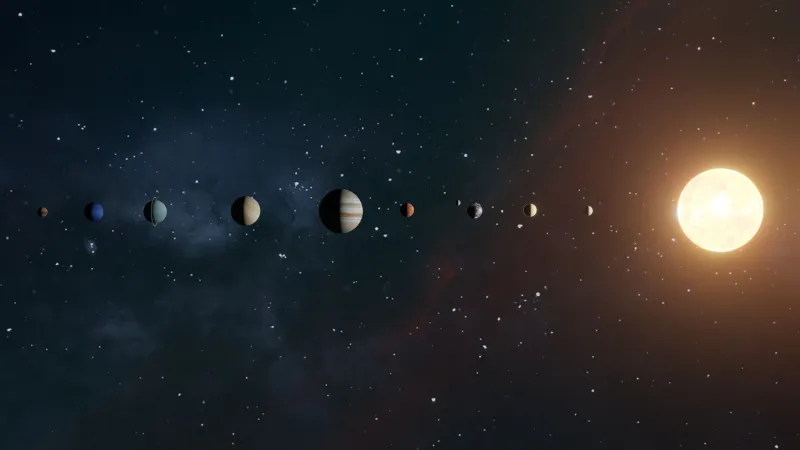
Here's a question that sounds like it should have a clean, textbook answer: how many moons does each planet in our solar system have? You'd expect a tidy list, maybe a wall chart in a middle school classroom, end of story. But astronomers keep finding new ones — sometimes dozens at a time — and the official tally changes so often that science writers have basically given up printing a "final" number.
Sound familiar? If you've been following the whole Pluto situation, you already know that defining things in space is messier than it looks. Turns out, moons are no different.
The Numbers That Keep Changing
Let's start with the current scoreboard, with the caveat that by the time you read this, something may have shifted.
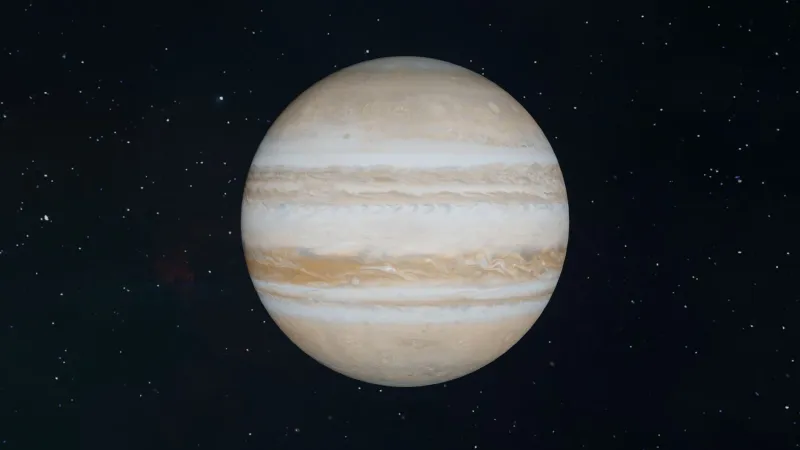
Jupiter is the undisputed heavyweight, sitting at 95 confirmed moons as of the most recent IAU tallies. Saturn, long considered the moon champion, comes in close behind at 146 — a number that actually leapfrogged Jupiter after a massive batch of small Saturnian satellites was confirmed in 2023. Uranus has at least 28, Neptune has 16, Mars has its two famous (and frankly weird) moons Phobos and Deimos, and Earth, of course, has its one beloved, tide-pulling companion.
Mercury and Venus? Zero moons each. Lonely, but scientifically interesting for reasons we'll get to.
The real story isn't just the numbers — it's how fast they're growing. Saturn's moon count jumped by 62 in a single announcement in 2023. Jupiter gained 12 new moons in one batch back in 2018. These aren't dramatic telescope moments with triumphant music. They're the result of painstaking surveys, improved technology, and a whole lot of follow-up observations to confirm that what astronomers spotted was actually orbiting the planet and not just drifting through the neighborhood.
So What Even Is a Moon?
This is where things get genuinely philosophical — and a little reminiscent of the Pluto debates that rocked the astronomy world in 2006.
There's no single, universally ratified definition of a moon the way there is (sort of) for a planet. The International Astronomical Union, the same organization that reclassified Pluto as a dwarf planet, hasn't issued a formal definition for natural satellites. Generally speaking, a moon is understood to be a natural object that orbits a planet or other non-stellar body. But that leaves a lot of wiggle room.
Size is one sticking point. Some of Saturn's newly confirmed moons are only a few kilometers across — barely bigger than a large asteroid. At what point does a chunk of rock in orbit become a moon versus just... a rock that happens to be going in circles? There's no firm cutoff. Astronomers tend to use "confirmed natural satellite" as the working standard, which requires multiple observations confirming a stable orbit, but even that process involves judgment calls.
Then there's the question of rings. Saturn's famous rings are made of billions of icy particles, each technically orbiting the planet. Nobody calls those moons. But the line between a ring particle and a tiny moonlet gets blurry fast — some small objects within Saturn's rings, like Pan and Daphnis, are officially classified as moons even though they're essentially embedded in the ring system.
Why Are We Finding So Many Now?
The short answer is better tools and smarter search strategies.
For most of astronomy's history, finding small moons required either getting lucky during a planetary flyby or squinting at ground-based telescope images hoping something faint showed up in the right place twice. The moons of the outer solar system — Jupiter, Saturn, Uranus, Neptune — are far enough away that their smaller satellites are extraordinarily dim. Spotting a 3-kilometer rock orbiting Jupiter from Earth is like trying to see a pebble from across a football stadium at night.
Modern wide-field survey telescopes, combined with sophisticated image-stacking techniques that combine multiple exposures to pull faint objects out of the noise, have changed the game entirely. The team behind Saturn's 2023 moon bonanza used the Canada-France-Hawaii Telescope along with careful multi-year tracking to confirm the orbits. It's detective work as much as discovery.
There's also a numbers game happening. As our detection threshold drops, we're essentially reaching deeper into a population of small objects that was always there — we just couldn't see them. Astronomers suspect there may be hundreds more tiny moons waiting to be confirmed around the gas and ice giants, objects that formed from the same chaotic early solar system processes that built the planets themselves.
The Capture Question
Not all moons were born alongside their planets. Some were captured — asteroids or Kuiper Belt objects that wandered too close and got gravitationally snagged into orbit. Jupiter and Saturn's irregular moons (the ones with tilted, elongated, sometimes retrograde orbits) are strong candidates for captured bodies.
This matters because it connects the moon census to bigger questions about how the solar system evolved. The Nice model, a leading theory about the early solar system's chaotic reshuffling, predicts that the giant planets migrated significantly and swept up debris along the way. Every weird little moon with a backwards orbit is potentially a data point in that story.
Earth's Moon, by contrast, almost certainly formed from a massive collision between early Earth and a Mars-sized body called Theia. That's why our Moon is so unusually large relative to its planet — it's essentially made of Earth. Mercury and Venus, lacking any moons, may have had their potential satellites stripped away by the Sun's gravitational influence, or they simply never accumulated debris in the right configuration to form satellites in the first place.
Does Any of This Change What We Know?
In a practical sense, finding a new 5-kilometer moon orbiting Saturn doesn't rewrite physics textbooks. But collectively, the growing census does matter.
Each confirmed moon adds to our statistical understanding of how solar system bodies cluster, how orbital dynamics work over billions of years, and what the outer solar system looked like during its violent formative period. Some of these tiny moons may be remnants of larger bodies that collided and shattered. Others might be pristine leftovers from the solar nebula. A few, particularly around Jupiter and Saturn, orbit near enough to their planets' warmth and tidal forces that scientists are paying attention to their potential — however remote — for interesting chemistry.
And honestly? There's something genuinely delightful about the fact that we're still finding new members of our own solar system neighborhood. We've sent probes to the outer planets, we've mapped the surface of Pluto, we've detected gravitational waves from merging black holes — and yet Jupiter is still quietly holding moons we haven't noticed yet.
The solar system, it turns out, isn't done surprising us. The moon count will almost certainly be different a year from now than it is today. And somewhere out there, a small, dark, tumbling rock is completing one more lap around a gas giant, waiting patiently to be discovered.
We'll get there eventually.