Backyard Astronomers Are Reshaping What We Know About the Outer Solar System
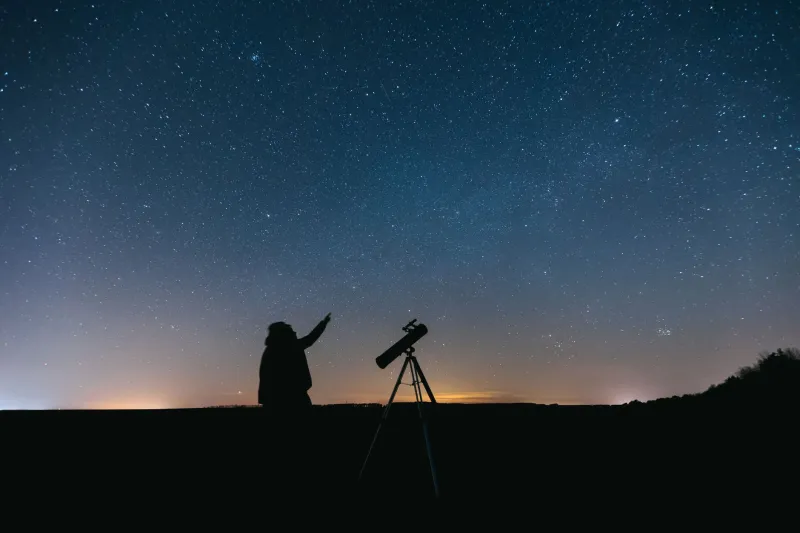
On a clear night in rural New Mexico, a retired electrical engineer named Gary points a fourteen-inch reflector telescope at a patch of sky that looks, to the naked eye, like absolutely nothing. He's been doing this for three years. He's contributed to the confirmed detection of two trans-Neptunian objects. He has never set foot in a university astronomy department.
Gary is part of a quietly growing movement that's changing the way we explore the outer solar system. Citizen scientists — amateurs, hobbyists, retirees, students, and curious people with internet connections — are logging real hours on real data and turning up real discoveries in the Kuiper Belt, the vast ring of icy bodies that stretches beyond Neptune and includes Pluto's cosmic neighborhood.
And they're finding things the professionals missed.
What the Kuiper Belt Actually Is (And Why It's So Hard to Survey)
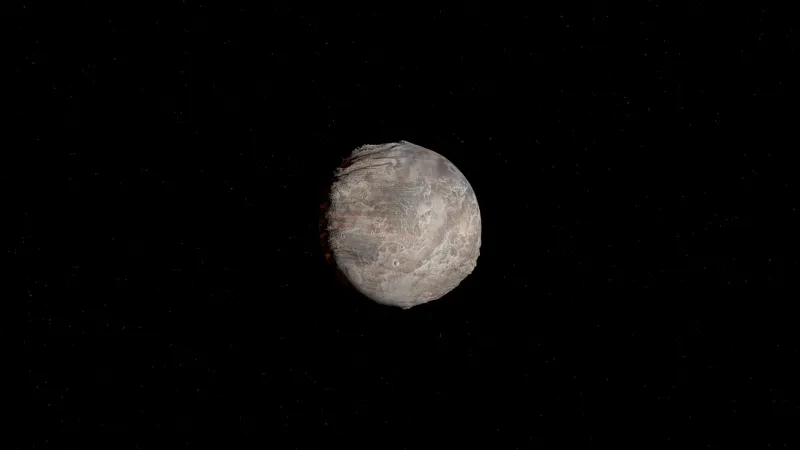
The Kuiper Belt is enormous. It extends from roughly 30 to 50 astronomical units from the Sun — that's 30 to 50 times the distance between Earth and the Sun — and it's populated by hundreds of thousands of icy objects ranging from house-sized chunks of rock and ice to dwarf planets like Pluto, Eris, and Makemake.
The problem is that most of these objects are incredibly faint, incredibly slow-moving, and scattered across a mind-boggling expanse of sky. Finding them requires either extremely powerful telescopes scanning wide swaths of sky over many nights, or an enormous amount of patient, careful analysis of archival image data — the kind of tedious, time-intensive work that professional astronomers often don't have the bandwidth to do alone.
That's where citizen scientists come in.
The Crowdsourcing Revolution
Projects like Zooniverse's "Planet Hunters" and the more specialized "Ice Hunters" and "Backyard Worlds" campaigns have mobilized tens of thousands of volunteers to help classify and analyze telescope data. Participants are shown real images from sky surveys — many from the Dark Energy Camera at the Cerro Tololo Inter-American Observatory — and asked to flag moving objects that might be previously uncatalogued Kuiper Belt bodies.
The scale of human contribution is striking. Algorithms can find the obvious targets, but the human eye is still surprisingly good at catching edge cases: faint objects near the detection threshold, unusual orbits, or artifacts that might fool a machine classifier. Volunteers working through Backyard Worlds: Planet 9 have collectively reviewed millions of image frames, and the project has directly contributed to peer-reviewed publications.
"There's a real skill that develops over time," said one longtime Backyard Worlds contributor from suburban Portland, Oregon, who goes by the username "KuiperKev" in the project's online forums. "After you've looked at a few thousand image pairs, you start to develop an intuition for what a real moving object looks like versus noise. I've caught things the automated pipeline flagged as low-confidence that turned out to be real."
At least five trans-Neptunian objects have been flagged initially by citizen scientists through Backyard Worlds before professional follow-up confirmed them. That number is almost certainly an undercount — the pipeline between volunteer flagging and formal publication is long and attribution isn't always clean.
The Backyard Hardware Getting Surprisingly Serious
Meanwhile, a separate community of serious amateur observers is doing independent discovery work with their own equipment. Modern consumer-grade telescopes, combined with sensitive CCD and CMOS cameras that have dropped dramatically in price over the past decade, have put genuine sky survey capability within reach of dedicated hobbyists.
A fourteen-inch telescope with a modern camera and good tracking can detect objects down to roughly magnitude 18 or 19 under dark skies. Most known Kuiper Belt objects brighter than magnitude 20 have already been catalogued, but the census of smaller, fainter bodies is still wildly incomplete — and that's where amateur observers are finding gaps.
"I'm not going to find Pluto," Gary said with a laugh. "But there are objects in the 18-to-20 magnitude range that haven't been officially tracked yet, and I can contribute astrometry — precise position measurements — that helps nail down their orbits. That's real science."
Astrometric data submitted by amateurs to the Minor Planet Center has been used to refine orbital calculations for dozens of outer solar system bodies. Better orbits mean better predictions of where objects will be, which helps scientists plan future observations and spacecraft trajectories.
What the Amateurs Are Actually Finding
Beyond individual objects, the cumulative data from citizen science efforts is beginning to reveal population-level patterns that are scientifically interesting.
One area of particular excitement is the orbital distribution of small Kuiper Belt objects. Theoretical models predict a certain spread of orbital shapes and inclinations based on the gravitational history of the outer solar system — including the proposed influence of a hypothetical large planet in the far outer solar system (often called Planet Nine, though its existence remains unconfirmed). Citizen-contributed discoveries are adding data points to this distribution that help test those models.
"Every new object we add to the census is a vote for or against different formation scenarios," explained one researcher at a major state university who collaborates with Backyard Worlds volunteers. "The amateurs aren't just filling in a catalog. They're helping us understand how the solar system got the shape it has today."
There's also been unexpected variety in what's turning up. Some recently catalogued small Kuiper Belt objects have unusual orbital characteristics that don't fit neatly into existing categories — they may be scattered disk objects, detached objects, or something that doesn't have a clean classification yet. Sound familiar? The classification problem that redefined Pluto's status is still very much alive and active in the outer solar system.
The Democratic Telescope
There's something almost poetic about the fact that Pluto's neighborhood — the region whose complexity helped trigger Pluto's reclassification in the first place — is now being explored partly by people sitting at kitchen tables in Iowa and Florida and Montana, clicking through image pairs on their laptops.
The IAU's 2006 decision was, among other things, a recognition that the solar system is far stranger and more populated than the nine-planet model suggested. Exploring that strangeness doesn't require a government grant or a PhD. It requires curiosity, a decent internet connection, and the willingness to look carefully at things that most people scroll right past.
Gary in New Mexico has that. KuiperKev in Portland has that. And increasingly, the data reflects it.
If you want to join them, Backyard Worlds: Planet 9 is free, runs in your browser, and is always looking for new classifiers. The outer solar system is big. There's room for everyone.